
Lance Armstrong’s Doping Controversy

Lance Armstrong’s Doping Controversy is as interesting as his entire life story is. Born on 18th September 1971 in Dallas, Texas Lance Armstrong is probably the biggest ‘fallen hero’ of the world’s sports history. He became the US national amateur cycling champion at the age of 20 with Subaru-Montgomery. Then he signed with the Motorola team and played in the US Olympics team in Barcelona and finished second in the year 1992. The next year he was crowned as the US National and became champion at the World Championships by beating Miguel Indurain but failed to finish at the top during that year’s Tour de France.
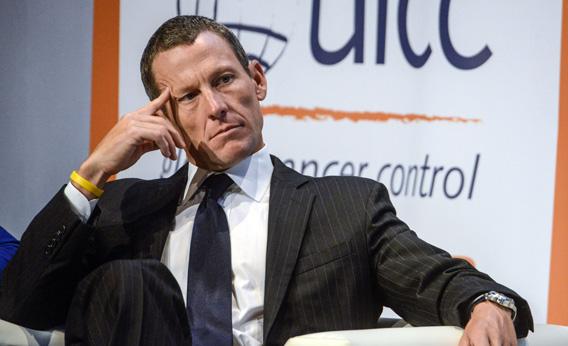
Lance Armstrong’s Doping Controversy

The next two years too he failed to achieve anything in the Tour de France but wins Leige-Bastogne-Leige spring classic in 1994. Hell fell on Armstrong when he was diagnosed with testicular cancer in 1996. Cancer was spreading all over his body, but Armstrong remained strong and founded the Lance Armstrong Foundation for Cancer during the same year. Over the next one year more Armstrong was getting treatment for cancer like brain surgery and chemotherapy. He was dropped by Cofidis and was signed by the US Postal Service team. Two years later in 1999 Lance Armstrong won the first ever Tour de France title by winning four stages. By 2002 Armstrong became the fifth rider to win Tour de France three times in a row and added three more in 2003, 2004 and in 2005 as well.

On the podium in 2005 he declared retirement from the professional cycling, which he overturned three years later. In a significant development during the 2010 Tour de France Lance’s former teammate at the US Postal team  Floyd Landis was stripped off his 2006 Tour de France due to doping. Landis announced same allegations against Armstrong as well. A year Armstrong declared his second retirement, but the doping issue was kept on haunting him. In 2012 June, the United States Anti-Doping Agency (USADA) initiated legal proceedings over allegations of doping against Lance Armstrong.

In response,  Armstrong filed a lawsuit in a US Federal Court claiming that USADA had offered corrupt incentives to other cyclists to testify against him and hence he must get a temporary restraining order against the agency. The USADA stripped off all his seven Tour de France titles according to WADA rules and they admitted that Armstrong was involved in the most sophisticated, professionalized and successful doping program that sports have ever seen!

Lance Armstrong was kept on denying the charges till January 2013 when admitted of doping in a television show chaired by Oprah Winfrey. Soon after the show UCI’s president Brian Cookson, asked Armstrong to testify completely about his doping. Armstrong asked for a ‘total amnesty’ which Cookson refused.


Latest

Capoeira: Brazil’s Martial Art That Was Hidden as a Dance

Capoeira is a Brazilian martial art created by enslaved Africans and disguised as dance to survive colonial bans. UNESCO Intangible Cultural Heritage since 2014. Here is the full history.

Chilean Rodeo: Chile’s National Sport and How It Works

Chilean rodeo is Chile's national sport since 1962. Two huaso riders guide a calf against a padded wall in a half-moon arena. Judged on precision, not speed. Here is the full guide.

Charreria: Mexico’s National Sport and UNESCO Cultural Heritage

Charreria is Mexico's national sport since 1933 and UNESCO Intangible Cultural Heritage since 2016. Nine equestrian events, the escaramuza women's competition, and a deep cultural tradition.

Dandi Biyo: Nepal’s National Sport Explained

Dandi Biyo is Nepal's traditional national sport, played with a long stick and small wooden peg. Learn how the game works, why Nepal adopted it, and how it survives today.

Newsletter

FIND YOUR PERFECT TENNIS PARTNER NEARBY IN LESS THAN 30 SECONDS

Must Check

Unlock Your Inner Yogi with the Best Yoga Pants for Women!

Yoga has become increasingly popular among women worldwide as...

Best Women’s Golf Pants: Petite, Plus Size, Jogger & Hot Weather Guide

How to find the right women's golf pants for your body type and the season — from petite and plus size fits to summer-weight fabrics and modern jogger styles.

Don't miss

What to Wear Kayaking: A Temperature-by-Temperature Clothing Guide

What to wear kayaking at every temperature. Warm summer conditions, 70-degree weather, 60-degree weather, cold water, women's paddling gear, and Florida-specific advice.

Everything about PGA European Tour

PGA European Tour The PGA European Tour is often regarded...

Miller and Sandeep Sink RCB

Sidelights: The only thing RCB did right in this game...

10 Biggest Cricket Stadiums In The World

Cricket is a popular game so the Big/ Largest...

How To Bet On Sports For Beginners: 10 Actionable Tips

If you're new to sports betting, you've come to...
Editor
David Whisler, the maestro of editing at Sportycious, brings a touch of panache to the world of sports journalism. With an eagle eye for detail and a flair for enthralling storytelling, David ensures Sportycious remains the go-to destination for readers seeking an exhilarating and enlightening experience. When not juggling commas and semicolons, you'll find David enthusiastically supporting his favourite teams and indulging in his own sporting escapades.
spot_imgspot_img

Dandi Biyo: Nepal’s National Sport Explained

Dandi Biyo is Nepal's traditional national sport, played with a long stick and small wooden peg. Learn how the game works, why Nepal adopted it, and how it survives today.

Charreria: Mexico’s National Sport and UNESCO Cultural Heritage

Charreria is Mexico's national sport since 1933 and UNESCO Intangible Cultural Heritage since 2016. Nine equestrian events, the escaramuza women's competition, and a deep cultural tradition.

Chilean Rodeo: Chile’s National Sport and How It Works

Chilean rodeo is Chile's national sport since 1962. Two huaso riders guide a calf against a padded wall in a half-moon arena. Judged on precision, not speed. Here is the full guide.